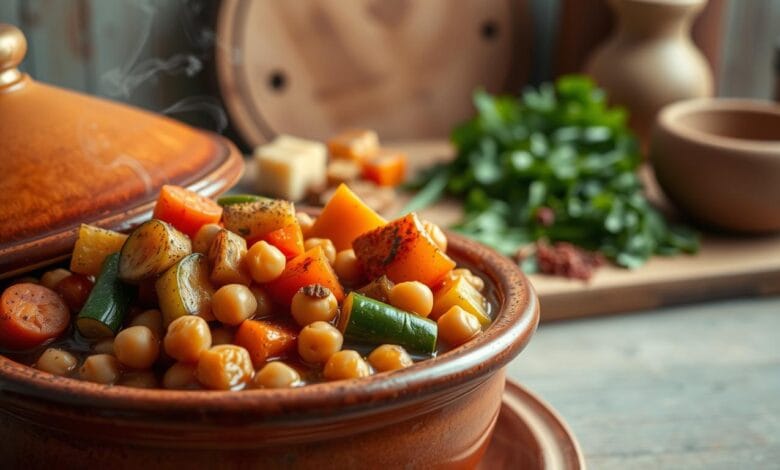
One rainy evening, you pull a wide pot from the cabinet and remember a slow, fragrant meal your neighbor once brought over. It warmed the whole house and required little fuss. That memory pushes you to try a simple north african-style stew that feels special but fits your weeknight time.
The tagine is a cone-lidded pot that traps steam and returns moisture to the stew, giving tender results. A Dutch oven works just as well for a deeply scented, one-pot dinner.
In this recipe you’ll layer warm spices like ras el hanout, cinnamon, cumin, and turmeric, and add dried fruit for gentle sweetness. Chickpeas add protein and texture, and pantry staples—onions, squash, and tomatoes—make this an easy, cozy food choice in about the same minutes you’d spend on many quick dishes.
Follow the steps here and you’ll learn how baking the covered pot concentrates flavor and yields a thick, velvety sauce. For more variations, see a related classic: Moroccan chicken lemon olive tagine.
Key Takeaways
- Learn what a tagine is and how it concentrates moisture for tender results.
- This recipe balances warm spices and dried fruit for sweet-savory flavor.
- Chickpeas provide protein; canned or cooked-from-dry both work.
- A Dutch oven can replace a traditional pot for home convenience.
- Bake the covered stew about 40 minutes after a brief boil for best texture.
Why You’ll Love This One-Pot Vegetable Tagine
This one-pot dinner turns pantry staples into a warm, spice-forward stew that feels special but takes almost no fuss. You start on the stove, then cover and bake for about 40 minutes, and the oven does the rest. That short time produces tender squash, soft legumes, and a sauce full of balanced flavors.
The dish is nutrient-dense and soothing. Warm spices like ras el hanout, cinnamon, and ginger work with cumin and turmeric to add warmth and an anti-inflammatory note. Finish it with lemon, fresh herbs, a pinch of salt, minced garlic, and a drizzle of extra-virgin olive oil to brighten every bite.
- One pot: less cleanup, predictable results.
- Make-ahead friendly: stores 5 days or freezes in portions.
- Flexible: tweak sweetness and heat; double for guests.
| Benefit | Why it helps | Quick tip |
|---|---|---|
| Easy cleanup | One pot cooks everything from sauté to bake | Use a Dutch oven if you lack a traditional pot |
| Balanced meal | Legumes and veg plus spices give protein and depth | Add a squeeze of lemon before serving |
| Great leftovers | Flavors develop over time; fridge or freezer friendly | Portion into single servings for fast reheat meals |
What a Tagine Is and How It Builds Flavor
The cooking vessel shapes how the dish develops: tight steam circulation equals deeper aroma and melt-in-your-mouth texture.
Traditional clay pots use a conical lid that funnels steam back into the stew. This constant return of moisture keeps ingredients tender and concentrates aromatic notes.
If you do not own one, a dutch oven with a snug lid copies the self-basting effect. Both vessels let slow, moist heat thicken the sauce while preserving chunks of carrots or sweet potatoes.
Flavor builds in layers: start by frying onions and garlic, then toast a curated spice blend like ras hanout. Add cinnamon, cumin, and turmeric for warmth, and finish with dried fruit such as raisins or dates for a sweet-sour balance.
- Circulation: moisture recirculates to tenderize.
- Layering: aromatics, then spice, then vegetables and fruit.
- Substitute: a dutch oven keeps results consistent.
| Feature | Traditional pot | Dutch oven |
|---|---|---|
| Material | Clay or ceramic | Cast iron |
| Steam recirculation | Excellent | Very good |
| Best for | North African recipes and slow stews | Versatile oven-to-stove braising |
Vegetable Tagine with Chickpeas: Ingredient Notes
How you choose chickpeas, spices, and fruit will determine the stew’s balance and depth. Gather ingredients before you start so the cook goes quickly and tastes stay bright.
Chickpeas: quick or cooked-from-dry
Canned chickpeas are fast and reliable for weeknights. If you want extra creaminess, soak and cook about ½ pound dried ahead of time for deeper flavor.
Spices that form the backbone
Ras el hanout acts as the seasoning core; buy quality blends at NY Shuk, Whole Foods, or specialty spice shops. Use cinnamon (a stick boosts aroma), cumin, turmeric, ginger, and a pinch of pepper to round the profile.
Vegetables, dried fruit, aromatics, and liquids
Finely dice butternut squash or swap sweet potatoes; add carrots and crushed tomatoes for body. Choose chopped dates for caramel notes or golden raisins/apricots for brightness.
- Start aromatics: onions and garlic soften first.
- Use vegetable stock and bay leaves for depth.
- Finish with lemon zest/juice, olive oil, and salt to taste.
- Measure in a cup or cups so portions stay consistent.
| Choice | Benefit | Tip |
|---|---|---|
| Canned chickpeas | Speed | Rinse well |
| Dried, cooked | Richer texture | Use ½ lb dried, cook ahead |
| Cinnamon stick vs ground | Aroma vs convenience | Use stick for subtle scent |
Step-by-Step: Make the Tagine on the Stove and in the Oven
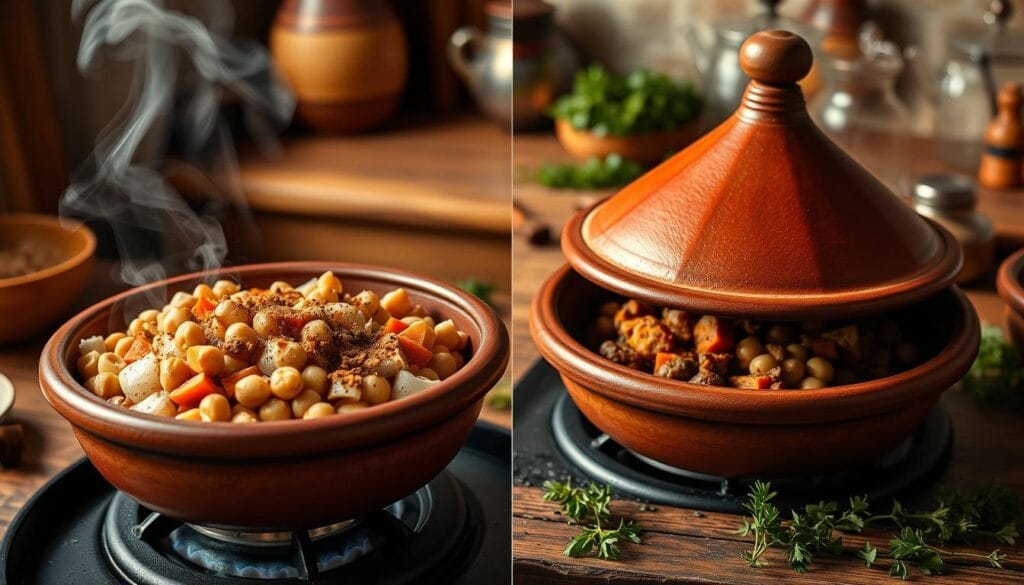
Begin at the stove: heat a sturdy pot, and coax sweetness from the onions in olive oil.
Saute and Toast
Heat 2 tablespoons olive oil in a Dutch oven or a tagine base over medium. Saute the onions until golden.
Add garlic and a cinnamon stick, then sprinkle ras el hanout and other ground spices. Stir and toast the spices for about 30–60 seconds so they bloom but do not burn.
Build the Stew and Bring to a Boil
Deglaze the pot with a splash of broth to lift any fond. Add the remaining cup of stock, diced squash, canned or cooked chickpeas, crushed tomatoes, bay leaves, and dates or raisins.
Season lightly with salt. Increase heat until the mixture comes to a boil, then turn off the stove.
Cover, Bake, and Finish
Drizzle a little extra olive oil over the surface and cover the pot. Transfer to a 375°F oven and bake about 40 minutes until squash is tender and the sauce is thick and stew-like.
Rest briefly, then finish with lemon zest and juice, plus chopped parsley or cilantro. Taste and adjust salt before serving.
- Timing tip: If you prefer stovetop only, simmer gently until tender, stirring occasionally.
- One-pot benefit: Saute to bake in the same pot for less cleanup and deeper flavor.
| Step | Action | Why it matters |
|---|---|---|
| Saute | Onions in olive oil, add garlic & cinnamon | Builds a sweet, savory base and releases aromatics |
| Toast spices | 30–60 seconds in hot oil | Unlocks fat-soluble flavors without burning |
| Bring to a boil | Add stock, vegetables, chickpeas, tomatoes | Ensures even braising and proper heat for oven finish |
| Bake & rest | Cover and bake ~40 minutes, then rest | Tenderizes vegetables and concentrates sauce |
Pro Tips for Maximum Flavor in Less Time
Smart timing and tiny prep moves help you get rich, concentrated flavor in under an hour.
Finely dice squash to hit the 40-minute bake
Cut squash into small, even pieces so they soften through the covered bake without turning to mush.
If you are short on time, pulse peeled squash in a food processor for a minute. That yields uniform pieces that cook in minutes.
Prep spices and aromatics ahead; batch for leftovers
Measure blends into labeled cups or bags so you can toss them into the hot pot and toast quickly. Chop onions and garlic up to two days ahead and keep airtight.
- Batch-cook a larger tagine for planned lunches and freezer meals.
- Store yogurt sauce 3–4 days refrigerated; leftovers keep about 5 days or freeze in single portions.
- Reheat gently, loosening with a cup or splash of stock, then finish with lemon and herbs to revive brightness.
| Action | Benefit | Fast tip |
|---|---|---|
| Dice or pulse squash | Tender in 40 minutes | Use food processor 1 minute |
| Pre-mix spice blend | Faster toast and consistent flavor | Label cups for quick grabs |
| Stage tools & ingredients | Smoother workflow, less stress | Lay out oil, spoon, and measuring cups before you start |
Variations and Easy Ingredient Swaps

A few pantry swaps let you tailor sweetness, heat, and texture in minutes. These small changes keep the basic method and timing intact while altering the final flavors.
Sweetness dial and floral notes
For extra sweetness, add more dates for a caramel-like depth. If you want tang, swap in golden raisins or chopped apricots.
Tip: A pinch of saffron gives a floral lift that pairs well with ras hanout and citrus without overpowering the dish.
Swap the base vegetables and legumes
Replace squash with sweet potatoes or add cauliflower and extra carrots to change texture and color.
If you prefer a creamier legume, use white beans instead of chickpeas to vary the protein profile in your chickpea tagine routine.
Add heat, brine, and finishing tweaks
Stir in harissa or a pinch of cayenne to raise the heat gradually. Balance that warmth with briny green or Kalamata olive pieces for contrast.
Keep core spices—ras hanout, cumin, and turmeric—so the dish stays familiar across these swaps.
- Scale salt carefully when you swap sweeter vegetables.
- Test small amounts of harissa so heat complements, not dominates.
- Finish variations with extra herbs or a squeeze of citrus to brighten flavors.
| Swap | Effect | Quick tip |
|---|---|---|
| Dates → golden raisins/apricots | Caramel vs tang | Adjust quantity to taste |
| Squash → sweet potatoes/carrot/cauliflower | Different textures and sweetness | Cut evenly for consistent bake time |
| Chickpeas → white beans | Creamier mouthfeel | Rinse canned beans well before adding |
How to Serve: Couscous, Flatbreads, and Wine Pairings
Serve the stew hot over a bed of pearl couscous for an easy, crowd-pleasing dinner. Pearl couscous soaks up sauce quickly and adds a pleasant chew that holds up to hearty pieces from the pot.
Grain and bread options
You can rotate grains—rice, freekeh, farro, or barley—to change the dish each time. Warm pita or lavash makes the meal hands-on and is perfect for scooping every last bit of sauce.
Garnish and Serving Suggestions
Serve the stew with fresh herbs and a drizzle of olive oil to enhance aroma and flavor. Offer a cup of yogurt sauce on the side to balance and cool spicy versions.
For drinks, pair with refreshing non-alcoholic options such as:
- Fresh mint tea
- Lemon-infused water
- Pomegranate juice
- Sparkling water with citrus
Bring the Dutch oven to the table to keep the dish warm and inviting.
Conclusion
With basic steps—saute, bloom spices, deglaze, bring to a boil, and bake—you get reliable results every time. This recipe yields a glossy stew that tastes even better the next day.
You can make the chickpea tagine in a dutch oven or any snug pot. Use canned chickpeas for speed or cooked dried beans for creamier texture.
Season around ras hanout, cinnamon, cumin, salt, and pepper, then finish with lemon, herbs, and a drizzle of olive oil. If you need to reheat, add a splash of vegetable stock or water and warm gently.
Keep this method in your weeknight rotation: it saves time, stores well, and adapts easily to swaps like golden raisins or extra carrots.