
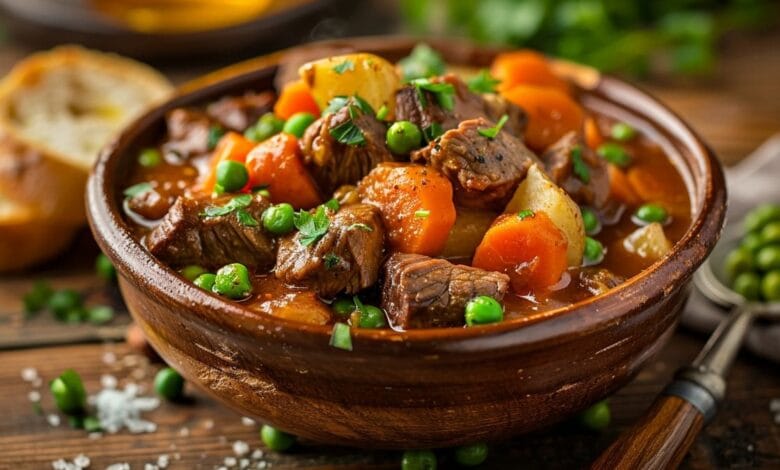
Slow Cooker Beef Stew — You’ve stood at your kitchen counter after a long day, craving a meal that feels like a warm hug. This recipe was written for nights when comfort matters more than fuss. You’ll find simple, reliable steps that let the pot do the work while you relax.
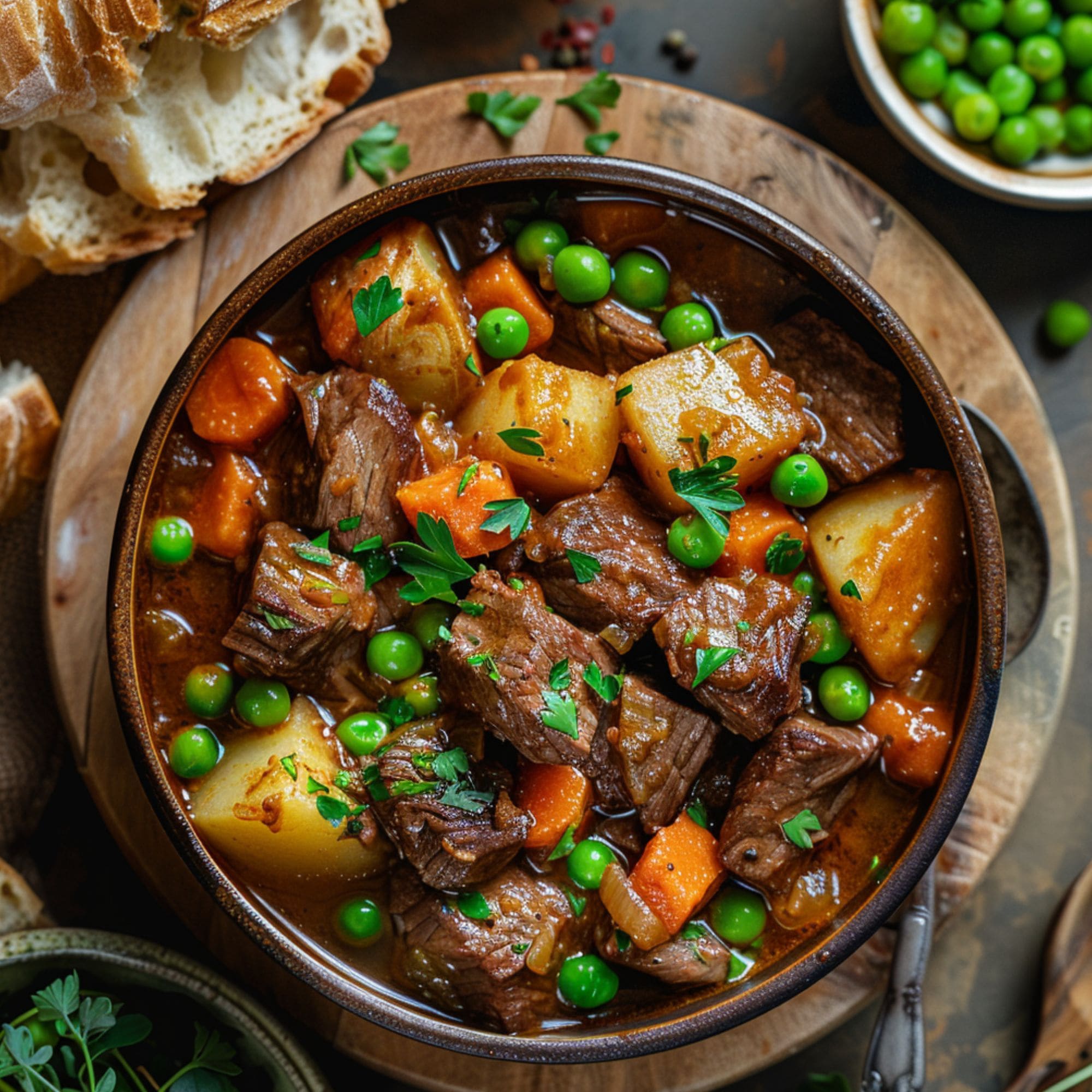
Start with well-seared chunks of beef, aromatic onions and garlic, and hearty roots like carrots and Yukon Gold potatoes. Deglazing with a cup of beef broth lifts every browned bit into the gravy. Small tricks—adding peas at the end, finishing with cold butter, and choosing the right thickener—make a big difference.
If you want the full, tested method and exact timings, see this trusted slow cooker beef stew recipe that walks you through searing, deglazing, and finishing for glossy, tender results.
Key Takeaways : Slow Cooker Beef Stew
- Sear first: browning locks in flavor before long cooking.
- Deglaze well: beef broth pulls fond into the base.
- Add peas last and finish with cold butter for shine.
- Thicken with slurry (cornstarch or flour) to match your preferred texture.
- Store and freeze: refrigerate 3–4 days or freeze up to 3 months.
Why You’ll Love This Comfort Food Classic
This version gives you homey comfort with little effort. You start with beef chuck that benefits from searing and low-and-slow cooking. That connective tissue breaks down into silky tenderness while vegetables keep their shape.
Set-it-and-forget-it convenience means you can handle your day and come back to a rich, satisfying bowl. Searing, deglazing, and umami boosters like Worcestershire, soy, and tomato paste build deep, layered flavor in every spoonful.
You can run the pot on low or high and still end with fall-apart beef and firm carrots and potatoes. Leftovers taste even better the next day, so this recipe works great for family dinners and meal prep.
- Flexible timing with broth-only options.
- Scales easily for bigger batches without losing quality.
- Nourishing, cozy, and ideal for chilly nights or hosting.
For a tested cooker beef stew method and exact steps, try this cooker beef stew method that pairs well with the approach described here.
Essential Ingredients for Big Beefy Flavor
Pick ingredients that build layers: meat with connective tissue, a rich liquid, and bold aromatics.
Meat and liquid: Use boneless beef chuck roast for the best balance of marbling and collagen. Dredge the cubes lightly in flour before browning to encourage a good crust and a thicker sauce later. Build the base with low-sodium beef broth and, if you like, a teaspoon of bouillon for extra depth.
Aromatics and vegetables: Start with diced onions and minced cloves garlic to perfume the pot. Add carrots and Yukon Gold or red potatoes for sweetness and structure. Stir in peas near the end to keep them bright.
Flavor boosters and fats
Mix about 3 Tbsp tomato paste with a splash of Worcestershire, a touch of soy sauce, and a spoon of Dijon to layer umami and tang. Sear in olive oil to develop fond, then finish the dish with cold butter for a silky mouthfeel. Keep salt and pepper balanced as you go.
| Ingredient | Purpose | Use |
|---|---|---|
| Beef chuck | Collagen and fat for tender meat | Boneless, cubed, dredged in flour |
| Beef broth | Liquid backbone and flavor | Low-sodium, about 2 cups |
| Tomato paste | Umami depth and body | 3 Tbsp, browned into the sauce |
| Onion & garlic | Aromatics that form the base | Diced onion; 2 cloves garlic, minced |
| Carrots & potatoes | Sweetness and texture | Yukon Gold or red potatoes, chunks |
Best Beef Cuts and Potatoes for Stew Success
Start with cuts that tolerate long braising and potatoes that keep their shape for the best results.
Top meat picks: Choose chuck roast first. Its connective tissue breaks down into gelatin, giving a rich mouthfeel and tender pieces after hours of cooking. Rump roast and bottom round work as backups and reward patience when cooked in moist heat.
Trim only large exterior fat. Keep intramuscular marbling—this fat melts and deepens the broth as the dish finishes. Cut the meat into 1–1½-inch cubes so each piece browns evenly and stays juicy.
Potatoes that hold up: Yukon Gold and red potatoes have less starch than russets. They keep their shape and avoid a mealy texture in long cooks. Cut them into ~1-inch chunks for even cooking and a pleasant bite.
- Partially submerge potatoes in broth so they steam and soften without falling apart.
- Use firmer varieties to withstand final thickening steps and stirring.
- Balance chunk size of meat and potatoes for even doneness.
| Item | Why it works | How to prep |
|---|---|---|
| Beef chuck | High collagen → tender, rich mouthfeel | Trim large fat; cube 1–1½” |
| Rump or bottom round | Lean alternative that becomes tender with time | Slice into uniform cubes; monitor doneness |
| Yukon Gold / Red potatoes | Lower starch, hold shape | Cut into 1″ chunks; partially submerge in broth |
| Russets | High starch → can fall apart | Avoid for long cooks or add late |
Step-by-Step: Make It in Your Slow Cooker
Follow a few focused steps and your pot will reward you with deep, homey flavor. Start by seasoning the meat and dusting each cube with flour to help the sauce thicken and the crust form during searing.
Season, flour, and sear in a large skillet
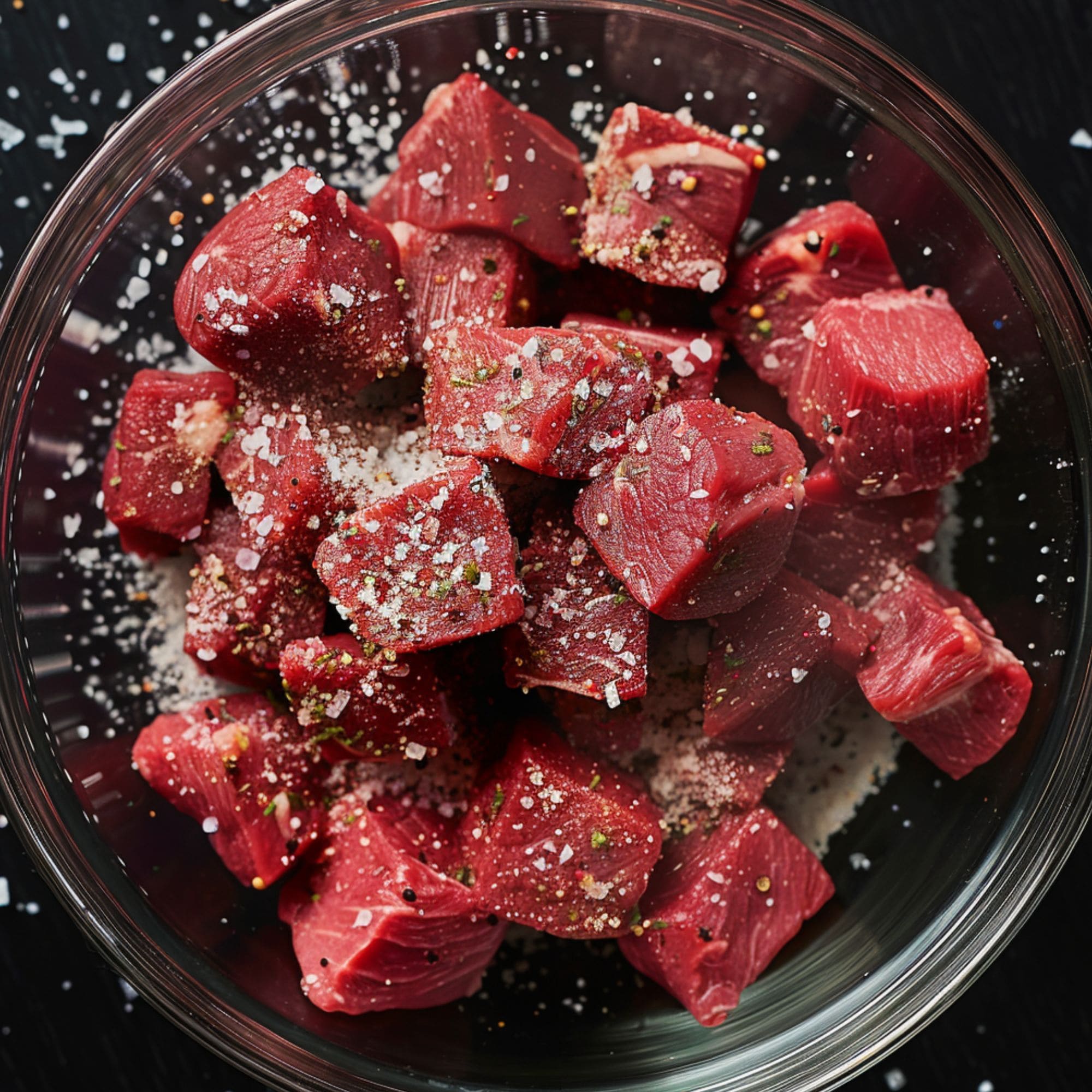
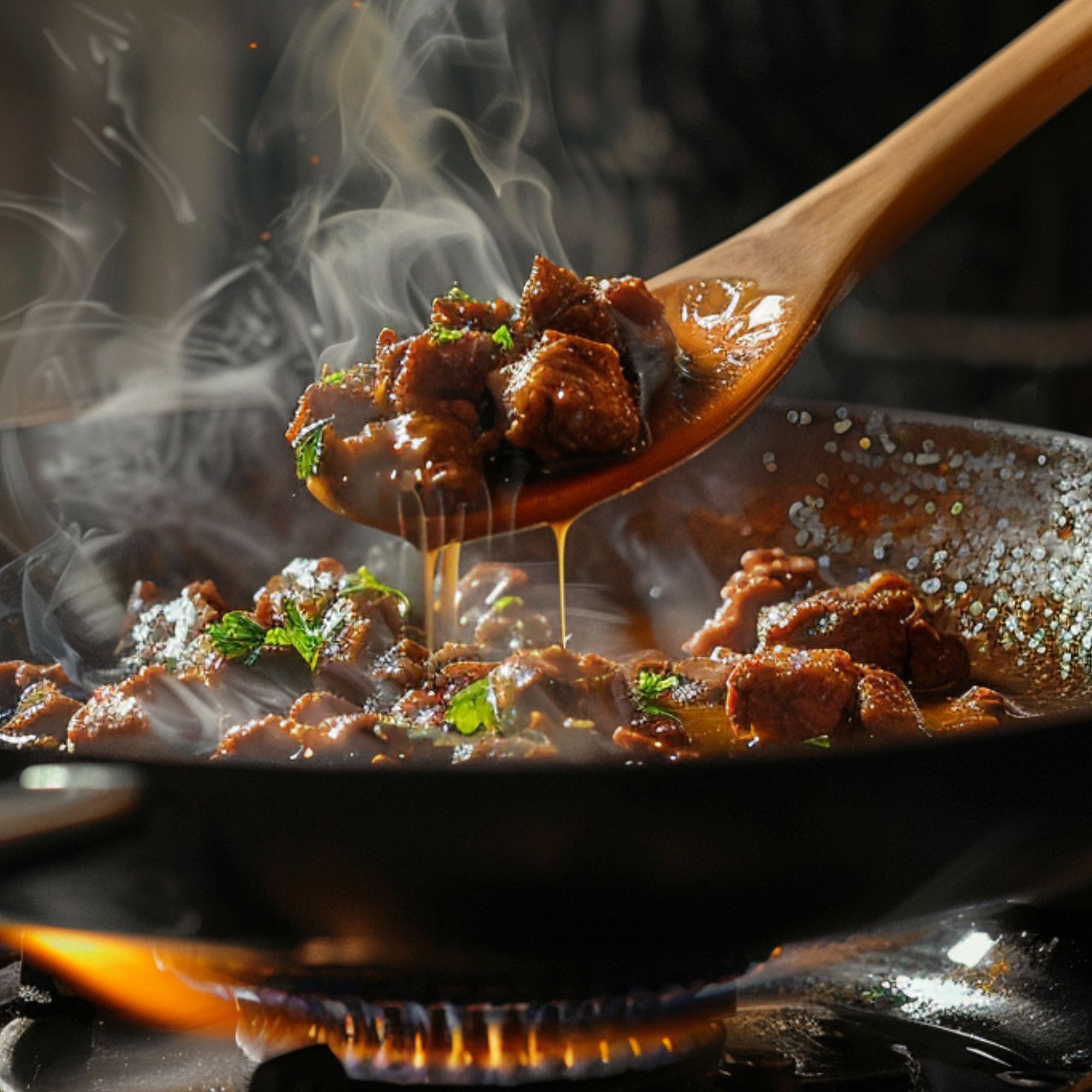
Pat the meat dry, then salt, pepper, and toss lightly with flour. Heat oil in a large skillet until shimmering. Brown the cubes in batches—about 45 seconds to a minute per side—so they caramelize without crowding the pan.
Deglaze with beef broth to capture fond
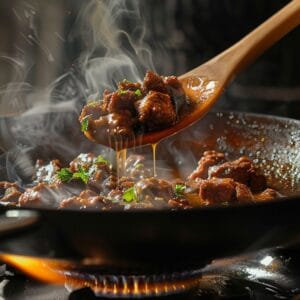
After browning, pour about 1 cup beef broth into the hot skillet. Scrape up browned bits; that fond is concentrated flavor for your sauce.
Layer ingredients in a 6-quart slow cooker
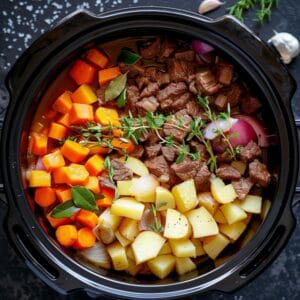
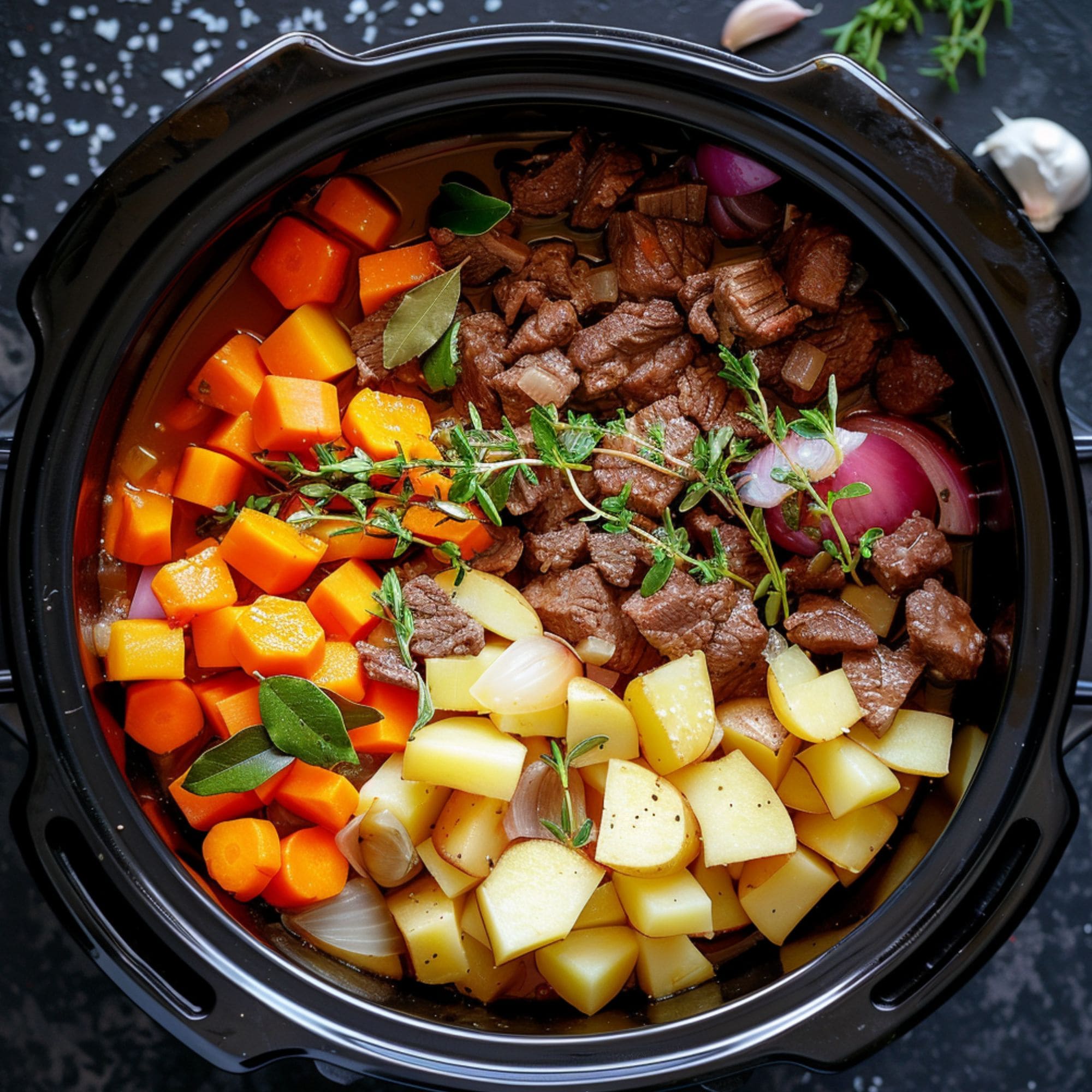
Into a 6-quart cooker add seared meat, onions, cloves of garlic, carrots, potatoes, tomato paste, Worcestershire, optional soy and Dijon, bay leaves, and enough broth to cover partially. Whisk broth with the paste and pour over everything.
Low and slow, then finish with peas and butter
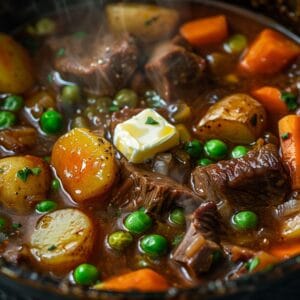
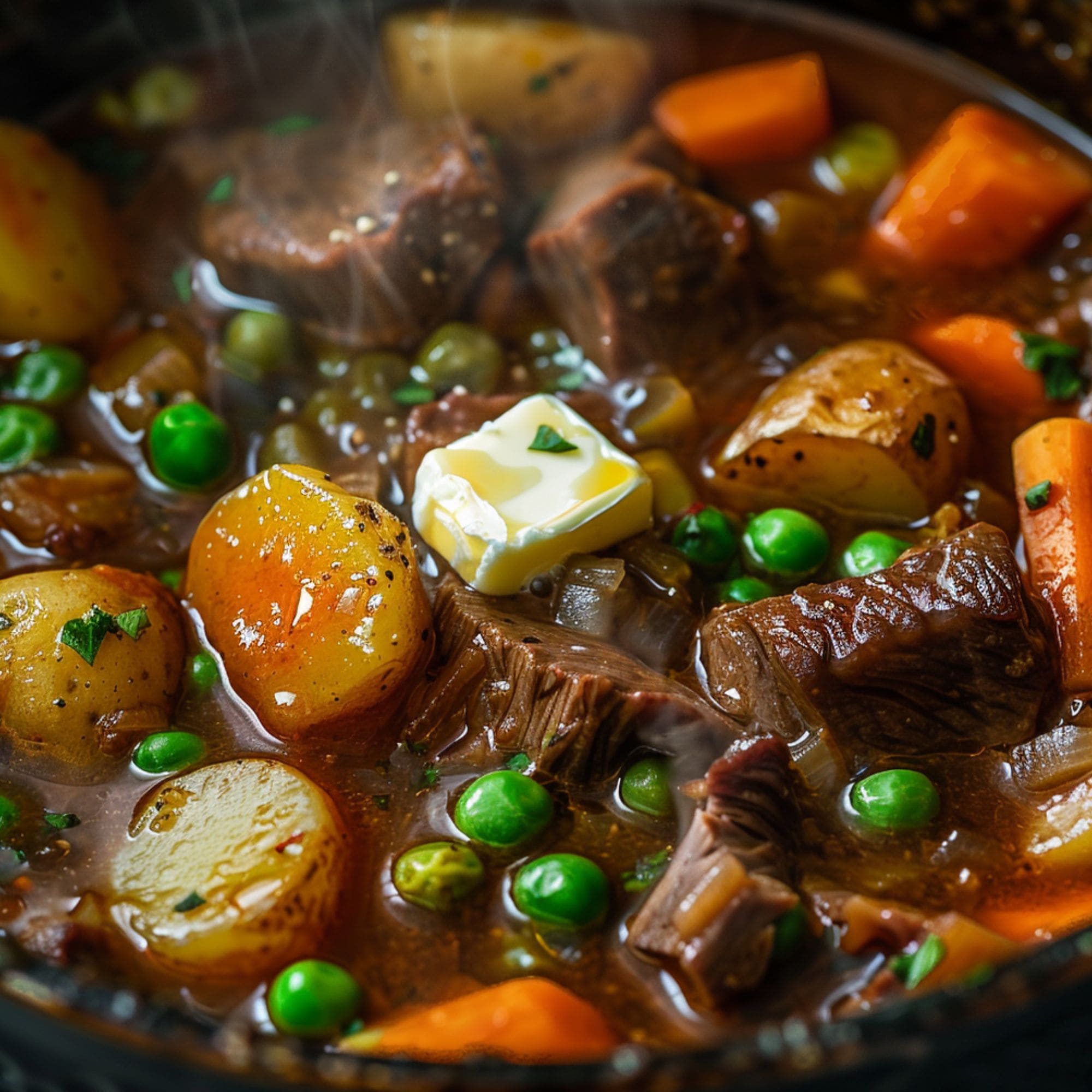
Cook on low for 7–8 hours or on high for about 4 hours. Stir in peas for the last 5–15 minutes to keep them bright. Off heat, swirl in 2 Tbsp cold butter for a glossy, velvety finish.
| Step | Why it matters | Timing |
|---|---|---|
| Season & flour | Promotes browning and thickens sauce | 5 minutes prep |
| Sear in large skillet | Builds fond and deep flavor | 45–60 seconds per side, batches |
| Deglaze with wine/broth | Loosens browned bits into the sauce | 1 cup, scrape for 30–60 seconds |
| Layer & cook in 6-quart cooker | Even heat and tender meat | Low 7–8 hours / High ~4 hours |
Cooking Times and Heat Levels That Deliver Tender Meat
Set your timer and let gentle heat do the heavy lifting so the meat becomes fork-tender without fuss.
Aim for low 7–8 hours when you want collagen to break down fully and produce silky, fall-apart meat. This long run gives the best texture and the deepest flavor in the broth.
Use high for about 3½–4 hours if you need a faster result. It will be ready sooner, though meat may be slightly firmer than with the low option.
How to handle doneness and timing
- If the meat is still tough at the end, reduce heat and extend time—gentle warmth fixes it more reliably than high bursts of heat.
- Avoid lifting the lid often so you don’t lose heat and stretch total hours beyond what you planned.
- Add peas only in the final 5–15 minutes so they stay bright and sweet.
- Start the cooker in the morning for evening service, or mid-day for later meals; this helps you plan around the hours required.
- Cut vegetables uniformly so everything finishes within the same window and you don’t overcook smaller pieces.
| Setting | Result | When to use |
|---|---|---|
| Low (7–8 hours) | Most tender, deep flavor; better broth body | Weeknight prep for dinner; when time allows |
| High (~3½–4 hours) | Faster finish; slightly firmer meat | When you need speed and still want a good meal |
| Extended low | Rescues tough meat; softens collagen more | If meat feels firm at check time, continue on low |
How to Thicken the Stew Like a Pro
A glossy, clingy sauce starts with the right thickening method and a little patience.
Cornstarch slurry: Mix 1/4 cup cold water with 3 Tbsp cornstarch until smooth. Whisk that into the hot pot and cook on high for about 30 minutes to activate and clear the gravy. Add to simmering liquid so lumps never form.
Natural thickening: Let diced potatoes and vegetables break down slightly as you stir. Their starch will thicken the broth and make a rustic, hearty sauce without extra binders.
Flour slurry option: Whisk 1 Tbsp flour into cold water or cup of broth, then stream it into the simmering pot while stirring. Simmer until the body matches your taste.
- Prefer a rustic texture? Skip slurries and rely on mashed potatoes.
- If you plan to freeze, wait to thicken when reheating to avoid separation.
- Always taste and adjust salt after thickening; viscosity mutes seasoning.
slow cooker beef stew Variations You’ll Want to Try
A splash of extra beef broth or pomegranate juice lifts the sauce into a more complex, layered flavor.
Swap liquids for depth. Try replacing part of the broth with pomegranate juice to boost richness and color.
Extra vegetables and textures
Add celery, mushrooms, or parsnips to amplify earthiness. Green beans are best stirred in at the end for a bright snap.
Sweet potatoes give a creamy, slightly sweet profile that matches smoked paprika nicely.
Herb and spice twists
Season with thyme and oregano for classic notes. Toss in mustard seeds for a subtle, savory pop. A pinch of brown sugar can smooth any sharp acidity without making the dish sweet.
Small tweaks that change everything
Increase tablespoons tomato paste slightly to deepen color and umami. When you add extra vegetables, balance with a touch more broth so the pot stays hearty, not dry.
| Variation | What it adds | How to use |
|---|---|---|
| Extra broth + pomegranate juice | Richer, layered flavor | Swap 1 cup broth with ½ cup broth + ½ cup pomegranate juice; deglaze skillet |
| Mushroom stock or malt-free barley broth | Deep, hearty depth | Replace part of the liquid with mushroom stock for earthy richness |
| Extra vegetables | Texture and sweetness | Add mushrooms/parsnips early; green beans at end |
| Herbs & seeds | Brightness and savory pop | Thyme/oregano during cook; mustard seeds in the last hour |
Pro Tips for Maximum Flavor and Tenderness
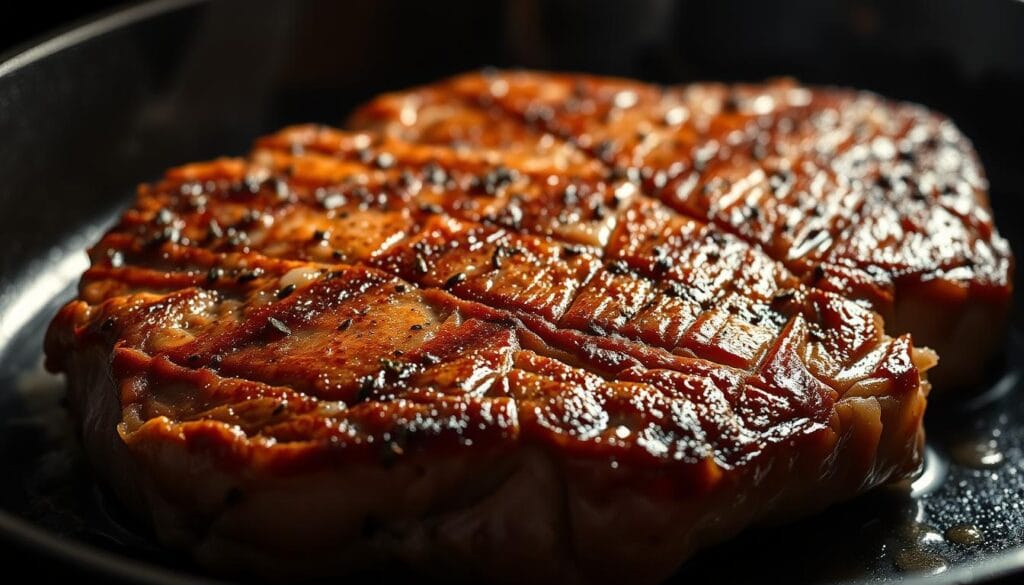
Small technique changes while searing make the biggest difference to final tenderness. Follow these focused moves to build deep flavor and keep juices locked in.
Brown the meat properly; don’t crowd the pan
Pat meat dry and heat the pan until oil shimmers. Brown in batches so each cube gets a crust—about 45 seconds per side.
Handle beef minimally to keep juices in
Limit poking and flipping. Less handling keeps internal juices and preserves texture after long hours in the pot.
Finish with cold butter for a velvety sauce
Off heat, stir in 2 Tbsp cold butter to emulsify the sauce. This simple step adds shine and rounds out fat and acid for balanced flavor.
- Work in batches to avoid steaming—crowding robs you of crust.
- Deglaze the skillet well so fond enriches the stew.
- Season in layers with salt and pepper for steady seasoning.
| Tip | Why it matters | Quick action |
|---|---|---|
| High heat sear | Builds flavor | 45 seconds per side |
| Minimal handling | Retains juices | Flip once |
| Monter au beurre | Silky sauce | 2 Tbsp cold butter off heat |
Serving Ideas and What to Pair With Your Stew
Choosing the right base and sides makes each bowl feel intentional. Pick one dominant starch and a bright vegetable to balance the rich broth and tender meat.
Over mashed potatoes, polenta, rice, or noodles
Spoon your stew over creamy mashed potatoes so the gravy soaks into every bite. Mashed potatoes are classic for a reason—smooth texture and comforting flavor.
Try buttered egg noodles, soft polenta, or plain rice when you want faster prep. Each base changes the mouthfeel and stretches the pot for more servings.
With bread: biscuits, cornbread, popovers, soda bread
Bake biscuits or cornbread to mop up the sauce. Popovers and Irish soda bread also pair well and add a rustic touch.
Warm bread on the side makes the meal feel homey and complete.
Easy veggie sides to round out the meal
Add simple, bright vegetables to cut the richness. Steamed green beans, roasted broccoli, or a crisp salad bring color and crunch.
Garnish plates with chopped parsley and serve in warmed bowls so the gravy stays hot. Little touches like a lemony vinaigrette on the salad help balance the hearty flavors.
- Spoon over mashed potatoes to soak up every drop of savory gravy.
- Try buttered noodles, polenta, or rice for quick, satisfying bases.
- Bake biscuits or cornbread; popovers and soda bread work well too.
- Serve roasted broccoli or steamed green beans for contrast.
- Keep a light salad with vinaigrette to balance the rich broth and meat.
- Ladle into warm bowls and garnish with chopped parsley for a fresh pop.
| Pairing | Why it works | When to choose |
|---|---|---|
| Mashed potatoes | Soaks up gravy; creamy contrast | Comfort dinners, family meals |
| Bread (biscuits/cornbread) | Mop the bowl; adds texture | Casual gatherings |
| Roasted veggies / salad | Brightness and crunch | To balance richness |
Storage, Freezing, and Reheating
Store leftovers properly and you’ll get tasty meals for days without losing texture.
Refrigerator: Cool the pot to room temperature, then pack into airtight containers. Chill promptly and use within 3–4 days to keep the meat tender and the flavors bright.
Fridge details
Keep containers sealed and labeled with the date so you remember the safe window. Larger pieces of potatoes hold up better, so leave them chunky when you portion.
Freezer tips
For longer storage, freeze up to 3 months. Leave about 1/4–1/2 inch headspace so expansion won’t crack containers. Expect vegetables to soften after thawing, especially if they cooked very soft to begin with.
Reheating and finishing
Thaw overnight in the fridge or reheat from frozen on low. Warm gently over medium-low, stirring occasionally. If the sauce seems tight, add up to 1 cup of broth or water to loosen and bring back body.
Pro tip: Skip thickening before you freeze. Wait until after reheating to add a slurry or mash some potatoes for a smooth finish. Add peas near the end of reheating so they stay bright and tender, not dull or mushy.
Helpful Tools and Pantry Staples
With the right gear and basics, you’ll save time and get consistent results every night.
Essential gear: Choose a reliable 6-quart slow cooker with a digital timer and locking lid for easy scheduling and safe transport. Keep a heavy large skillet for high-heat searing; it builds fond and better flavor.
Small tools that matter
Stock measuring spoons and a well-organized spice rack so seasoning stays precise. Add a garlic twister or mincer for quick, fresh garlic that perfumes the pot.
Pantry basics to keep on hand
Keep tomato paste, Worcestershire, soy sauce, dried herbs, and quality olive oil in your pantry. These simple ingredients layer flavor without fuss.
Storage and prep
Use 16-oz stackable storage containers to portion lunches, freeze extras, and transport meals. They save space and make reheating simple.
- Why it helps: Proper tools cut hands-on time and improve consistency.
- Tip: Add small affiliate links for recommended models if you share gear buying notes with readers.
| Item | Benefit | How to use |
|---|---|---|
| 6‑quart slow cooker | Timed cooking and safe transport | Set timer; lock lid for travel |
| Large skillet | High heat searing → better fond | Brown meat in batches with oil |
| Measuring spoons & spice rack | Consistent seasoning | Measure salts and dried herbs precisely |
| Stackable 16‑oz containers | Easy meal prep and freezing | Portion lunches; leave headspace when freezing |
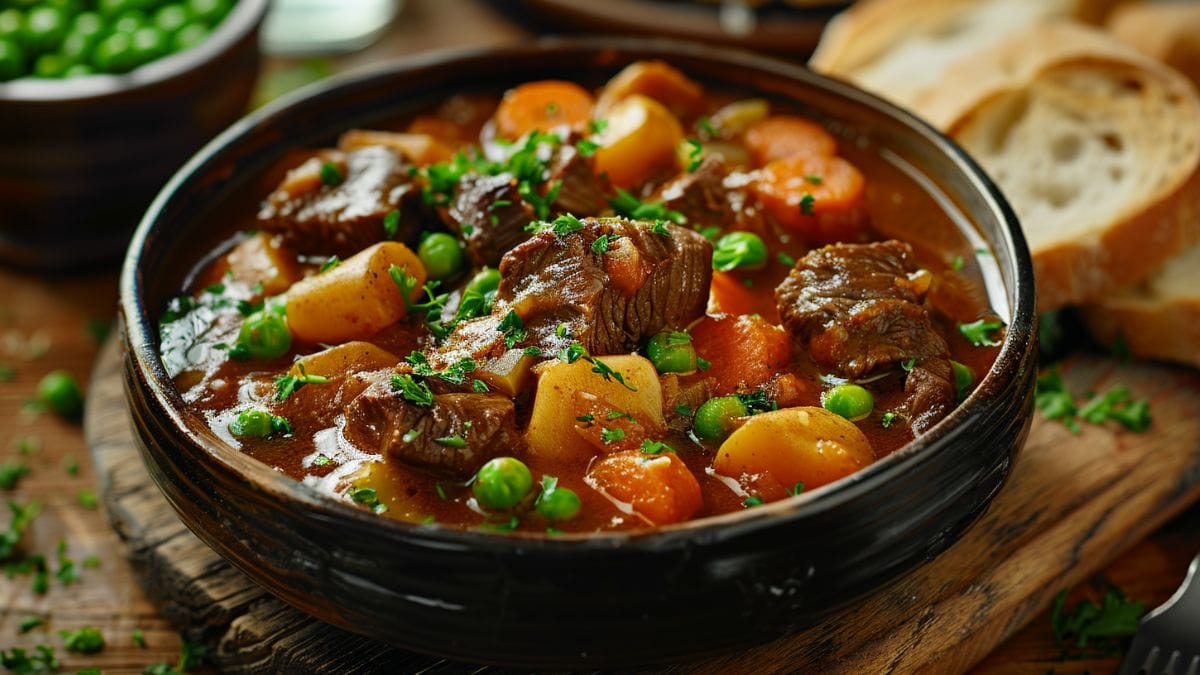
Slow Cooker Beef Stew

Equipment
- 1 Slow Cooker (6-quart) Avec minuteur et couvercle verrouillable
- 1 Large Skillet Pour saisir la viande
- 1 Wooden spoon Pour mélanger doucement
- 1 Cutting board Pour couper la viande et légumes
- 1 Sharp knife Pour détailler le bœuf et les légumes
- 1 Measuring spoons Pour les assaisonnements
- 1 Measuring Cups Pour le bouillon et liquides
- 1 Airtight Containers Pour conserver ou congeler les restes
Ingredients
- 2 lb Beef chuck roast Cut into 1-inch cubes
- 3 tbsp Olive oil For searing
- 1 — Onion Diced
- 2 — Garlic cloves Minced
- 3 — Carrots Cut into chunks
- 4 — Yukon Gold potatoes Cut into chunks
- 3 tbsp Tomato paste —
- 3 cup Beef broth (low-sodium) —
- 1 tsp Worcestershire sauce —
- 1 tsp Soy sauce Optional
- 1 tsp Dijon mustard Optional
- 2 — Bay leaves Remove before serving
- — to taste Salt & pepper —
- 1 cup Frozen peas Add at the end
- 2 tbsp Butter Cold, to finish sauce
Instructions
- Season and Flour the Beef: Pat the beef cubes dry, season with salt and pepper, and toss lightly with flour to coat.
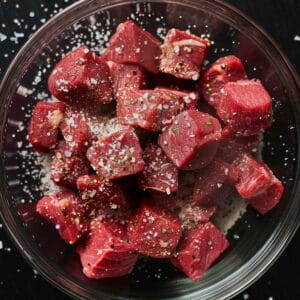
- Sear the Beef: Heat olive oil in a large skillet. Sear the beef cubes in small batches, 45–60 seconds per side, until golden brown.
- Deglaze the Pan: Pour 1 cup beef broth into the hot skillet and scrape up all browned bits (fond) to capture flavor.
- Assemble in Slow Cooker: Transfer seared beef and pan juices into a 6-quart slow cooker. Add onions, garlic, carrots, potatoes, tomato paste, remaining broth, Worcestershire, soy sauce, Dijon, and bay leaves.
- Slow Cook the Stew: Cover and cook on LOW for 7–8 hours or HIGH for 3½–4 hours until the beef is fork-tender and vegetables are fully cooked.

- Finish the Stew: Stir in peas during the last 10 minutes of cooking. Remove from heat and swirl in cold butter for a silky finish.
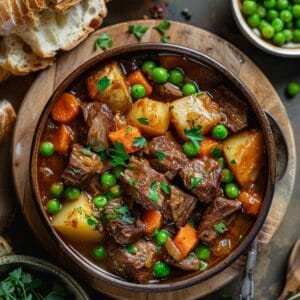
- Serve: Remove bay leaves, adjust salt and pepper, and serve hot with mashed potatoes, rice, or crusty bread.

Notes
- Add peas at the very end so they stay bright and fresh.
- Cut potatoes into larger chunks so they keep their shape during slow cooking.
- If the stew is too thin, thicken with 1 tbsp flour or cornstarch mixed with cold water.
- Store in the fridge for 3–4 days or freeze for up to 3 months.
Nutrition
Conclusion of Slow Cooker Beef Stew
Slow Cooker Beef Stew — When you want a dependable weeknight option, this method delivers consistent, tender results every time.
You’re set with a repeatable beef stew recipe that starts with well-seared chuck, tomato paste, Worcestershire, optional soy and Dijon, and a rich cup of beef broth (or a splash of pomegranate juice) to deglaze..
Cook low for 7–8 hours or high for about 4 hours, then finish with peas and cold butter. Thicken after reheating for best texture. Store leftovers 3–4 days or freeze up to 3 months.
Bookmark this stew recipe and use the tools and pantry staples suggested here. With a few simple steps you’ll have a cozy, nourishing meal ready in minutes the next time you want to feed family or friends.
