
Lamb Tagine with Prunes and Almonds—Imagine you walked into a kitchen where warm spices wrapped around the room like a hug. A friend served a slow-simmered stew and invited you to taste. That first bite mixed sweet fruit, toasted nuts, and tender meat, and you knew this dish would return to your table again.
A Moroccan tagine is an earthenware pot built to keep steam cycling back down, so food stays moist and aromatic. You learned that the cooking method is as important as the ingredients. Slow simmering makes meat fall-apart tender while spices bloom.
The classic version layers saffron and cinnamon with prunes and toasted almonds, then finishes with sesame and fresh herbs. You can use a tagine, a Dutch oven, or a heavy pot to get the same result. This guide walks you through tools, timing, and simple techniques so you can make this rich, balanced stew at home.
Key Takeaways
- You’ll learn step-by-step how to build deep, balanced flavors.
- Slow cooking in a tagine or Dutch oven yields the best tenderness.
- Simple pantry spices like saffron and cinnamon create authentic aroma.
- Practical timing tips help you plan prep and serving with confidence.
- Easy substitutions let you adapt the recipe to your kitchen and schedule.
About Moroccan Tagine and What You’ll Need
A tagine is a two-piece earthenware vessel: a shallow base and a tall, conical lid that condenses steam and returns moisture to the pot. This design is why slow, gentle cooking keeps meat juicy and deeply flavored.
Equipment tips: if you use a glazed tagine over gas, place it on a diffuser to avoid thermal shock. Many cooks simmer in a 9-quart Dutch oven or heavy soup pot, then transfer the stew to a serving base for the table.
Essential tools and heat management
Choose a heavy pot for even heat and a snug lid for long braises. Use a low flame and steady simmer to coax flavor without scorching sugars from honey or fruit.
Key ingredients and cuts
Gather saffron threads, ground cinnamon, honey, pitted prunes, almonds (slivered or Marcona), onions, garlic, and olive oil. Add ginger, turmeric, cumin, or ras el hanout to deepen the profile.
Select well-marbled cuts made for braising: shoulder, neck, shanks, or a leg cut into chunks. These yield the best texture after a long, slow simmer.
- Quick checklist: earthenware or Dutch oven, diffuser for gas, low steady heat, saffron and cinnamon, olives? optional for garnish.
- Swap to chicken if you prefer shorter cook times using the same spice blend.
| Item | Purpose | Recommended Size/Form | Tip |
|---|---|---|---|
| Conical pot | Condenses steam | Two-piece earthenware | Use for serving if you simmer in Dutch oven |
| Dutch oven | Primary simmering vessel | 9-quart or heavy 6–7 qt | Even heat, oven-safe option |
| Diffuser | Protects glaze | Metal disk for gas ranges | Prevents cracking from direct flame |
| Key ingredients | Flavor backbone | Saffron threads, cinnamon, honey, prunes, almonds, onions, garlic, olive oil | Prep saffron as threads; toast almonds lightly |
Lamb Tagine with Prunes and Almonds: Step-by-Step Recipe
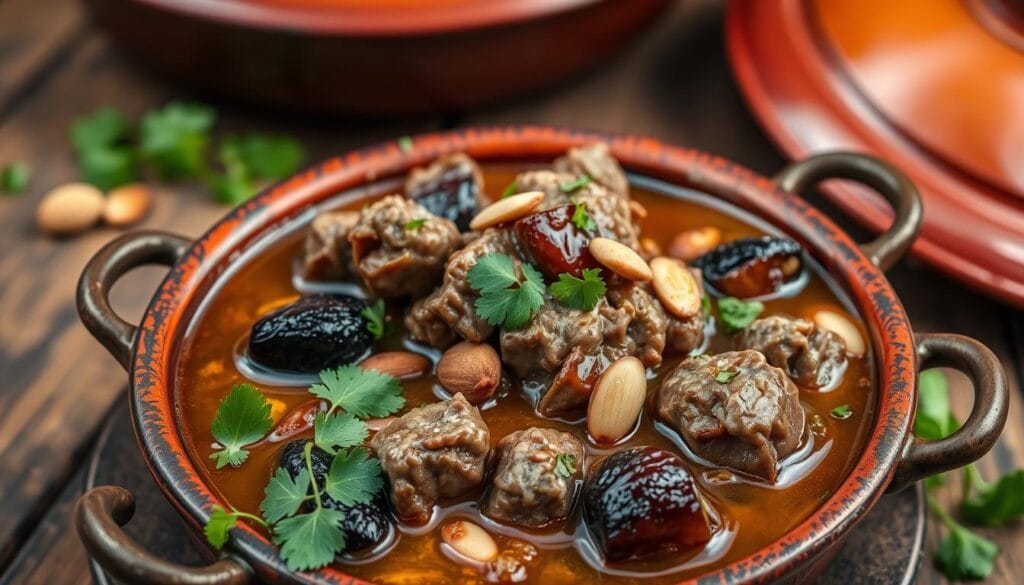
Follow a clear sequence to build deep flavor without rushing. Start by warming olive oil over medium heat, then sweat sliced onions until they turn soft and translucent.
Sweat the aromatics
Add garlic and cook until fragrant, about 30 to 60 seconds. Keep the heat gentle so the aromatics soften but do not brown.
Brown the meat and bloom spices
Add the lamb pieces and brown on all sides to develop fond. Stir in ground ginger, turmeric, ras el hanout, a pinch of saffron, and a dash of ground cinnamon. Cook briefly so the spices bloom in the hot oil.
Add liquid and slow-simmer
Pour 1 to 2 cups of broth or water to nearly cover the meat. Bring to a boil, then reduce to a gentle simmer, cover, and cook until fork-tender—roughly 1 to 2 hours on the stovetop. A pressure cooker cuts the time to about an hour.
Finish and serve
Uncover near the end and reduce until the onions and oil form a glossy sauce. Stir in pitted prunes and toasted almonds, taste, and balance with a spoonful of honey. Season with salt and pepper.
- Gently simmer until the sauce coats the back of a spoon.
- Sprinkle toasted sesame seeds and torn cilantro before serving.
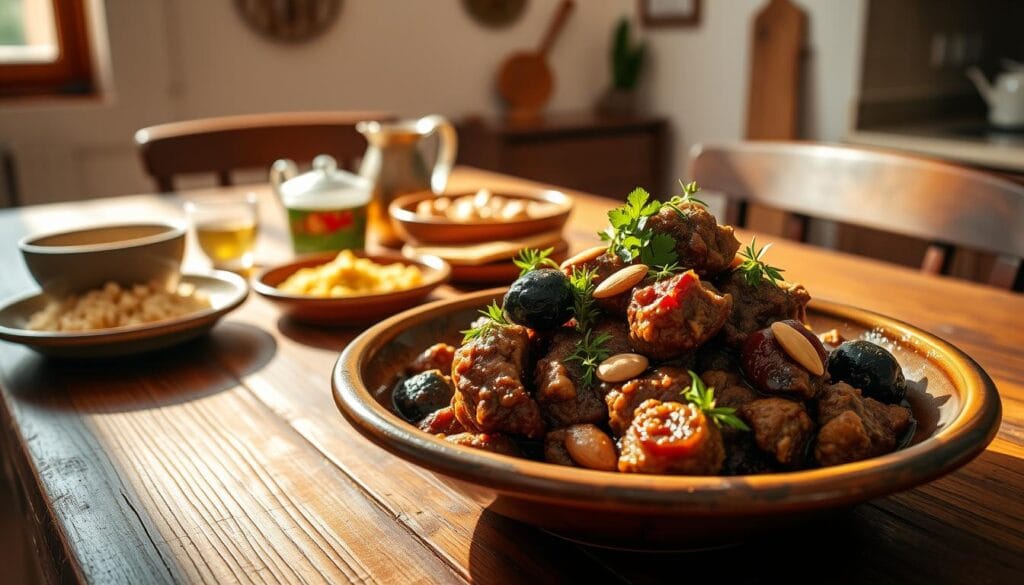
- Serve hot with plain couscous or crusty bread to soak up the sauce.
| Method | Time | Best use |
|---|---|---|
| Stovetop | 1–2 hours | Traditional slow simmer for deep flavor |
| Pressure cooker | ~1 hour | When you need tender meat fast |
| Oven hold | Low heat after browning | Keep warm while reducing sauce |
Pro Tips, Variations, and What to Serve With Your Tagine
Start by budgeting minutes for browning and hours for the slow simmer. That simple plan prevents surprises and ensures the meat yields easily to a fork. If you need speed, use a pressure cooker, then uncover to reduce the sauce until it glazes the back of a spoon.
Manage heat carefully. Keep a quiet simmer so sugars from fruit or honey don’t burn. If the pot bubbles too hard, lower the flame or use a diffuser for steadier control.
Substitutions and add-ins
Swap some prunes for apricots to add brightness. A few strips of orange peel or a squeeze of lemon lift the flavor without overpowering the spice base.
Prefer poultry? Apply the same spice mix to chicken and shorten the time. For guidance on a poultry version, see a trusted Moroccan chicken tajine.
Serving and plating
Bring the finished stew to the table in the base, pile tender pieces in the center, and arrange fruit and nuts on top. Garnish with sesame seeds and cilantro.
| Serve with | Why it works | Tip |
|---|---|---|
| Plain couscous | Soaks up sauce | Fluff with a fork before plating |
| Crusty bread | Great for scooping | Slice thick for sharing at the table |
| Simple salad | Refreshes the palate | Dress with lemon and olive |
- Taste before serving; adjust salt and pepper.
- If sauce thickens too much, add a splash of stock or water and simmer briefly.
- Finish with a drizzle of olive and a few torn herbs for a bright, final note.
Conclusion
A careful final reduction and thoughtful presentation can turn a slow-braised dish into an unforgettable dinner.
You now have a clear roadmap to craft a satisfying tagine at home. Follow simple steps—sweat the aromatics, brown the meat, let it simmer slowly—and finish by reducing the sauce until it beautifully coats the spoon.
Keep your mise en place minimal and focus on timing. Add fruits and nuts at the end so they stay tender and flavorful. Serve the tagine right from the base at the table for a warm, communal dining experience.
Print the recipe for easy reference, or grab a recipe card before you start. With attention to heat, seasoning, and a concise ingredient list, this stew transforms into a low-stress centerpiece that looks impressive and tastes just like home.