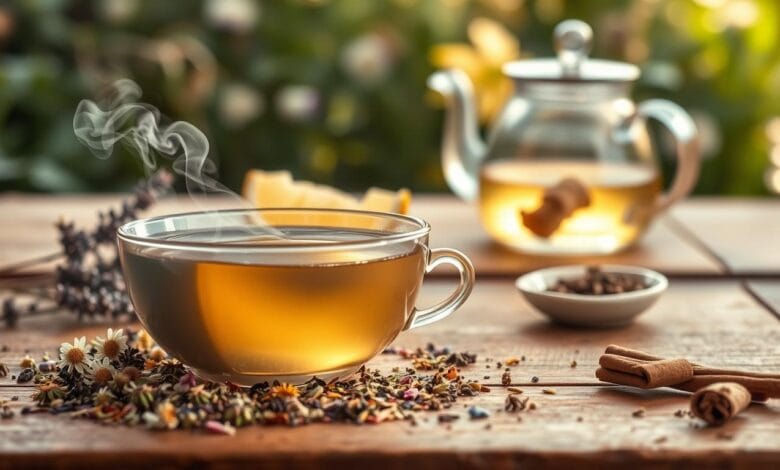
I remember my first winter with herbal detox tea after a week of bad eating and too much coffee. It was a small pause, but it changed how I felt. I started using Traditional Medicinals, Yogi Tea, and herbs from my kitchen. I found that a simple detox tea can be comforting and useful.
This guide will show you how to use herbal detox tea to help your body. We’ll cover simple recipes, how to brew, and the science behind detox teas. My goal is to make detox tea a part of your daily routine, not a big cleanse.
Key Takeaways
- Herbal detox tea offers gentle, plant-based support for the body’s natural cleansing organs.
- This guide blends tradition (Ayurveda, TCM) with modern, evidence-based tips.
- I share practical brewing steps and flavor tips tested in a home kitchen.
- Choose blends and brands carefully (read ingredients; consider goals).
- Herbal cleanse tea works best as part of a balanced diet and lifestyle.
What is Herbal Detox Tea?
Herbal detox tea is a gentle, daily ritual that helps the body clean itself. It’s like a warm reset for digestion, liver function, and fluid balance. This approach is easy and doesn’t require drastic measures.
Understanding herbal detox tea means knowing its purpose. These blends use herbs from Ayurveda and Traditional Chinese Medicine. They support digestion, mild diuresis, and liver or circulatory balance, not a medical cleanse.
Definition and Purpose
When I make a herbal infusion, I think about its purpose first. Some blends support the liver, others digestion, and some skin clarity. It complements the body’s cleansing pathways, not replace medical care.
I suggest starting with short cycles and listening to your body. A small daily cup can help digestion after rich meals or be a comforting ritual in the morning or evening.
Common Ingredients
Over the years, I’ve found a few herbs that work well together. Dandelion root or leaf helps with bile and bloating. I roast the root for a deeper flavor.
Burdock root is great for skin clarity. It pairs well with nettle leaf, which adds nutrients and supports urinary flushing. Ginger warms and aids digestion, while peppermint cools and soothes bloating.
| Herb | Primary Role | How I Use It |
|---|---|---|
| Dandelion (root & leaf) | Stimulates bile, supports liver and kidneys | Roasted root for a rich brew; leaf in light daily infusions |
| Milk Thistle | Liver-protective, supports regeneration | Short infusion or combined with rooibos; also available as tincture |
| Burdock Root | Traditional blood purifier, supports skin and kidneys | Simmered in longer decoctions for deeper extraction |
| Ginger | Warming, anti-inflammatory, aids digestion | Fresh slices in hot water for comfort and digestion |
| Peppermint | Soothes digestive discomfort and reduces bloating | Short steep for a cooling, calming cup |
| Nettle Leaf | Nutrient-dense, supports kidney function | Light infusion, often paired with burdock for skin support |
Commercial blends may include licorice, cilantro, coriander, juniper berry, rhubarb root, or skullcap. I use these with caution because they can be strong. Simple blends are usually the best for beginners.
Herbal detox tea is like a customizable cup for daily wellness. Start simple, observe how you feel, and adjust ingredients to meet your goals.
The Benefits of Drinking Herbal Detox Tea
Drinking herbal detox tea can feel like a mini-vacation from a busy day. It won’t replace sleep or healthy meals. But, it can help by keeping you hydrated and easing digestion after big meals.
Improved Digestion
Some herbs really help with digestion. Dandelion root and roasted dandelion boost bile and digestive juices. This helps break down fats and complex fibers.
Ginger helps move food through your gut and eases nausea and bloating. Peppermint calms the digestive tract and cuts down on gas.
After a big meal, a warm cup of tea can reduce bloating and feel calming. Steeping the tea for 10–15 minutes can offer stronger support. The best results come when you drink tea with mindful eating and plenty of water.
Increased Energy Levels
Some teas offer a gentle energy boost without caffeine. Nettle leaf is packed with iron and vitamins that boost vitality. Diuretic herbs like dandelion can help reduce water retention and make you feel less sluggish.
Switching from coffee to warm herbal tea in the morning gave me a steady, gentle energy. Look for teas rich in nutrients if you’re looking for a natural energy boost.
Enhanced Skin Health
Herbs like burdock root and cleavers are known for supporting clear skin. Nettle adds nutrients and may reduce puffiness by supporting kidneys and circulation. Better skin often comes with better hydration and cleaner eating.
Clearer skin came after weeks of drinking herbal tea and staying hydrated. This shows that herbal detox tea supports a healthy lifestyle, not magic fixes.
It’s important to see herbal detox tea as part of a healthy routine. It can support liver function, digestion, and hydration. But, there’s limited scientific proof that it “removes toxins.” View it as a nourishing habit in a broader, healthy lifestyle.
How to Choose the Right Herbal Detox Tea
I start by naming my goal — digestion, liver support, clearer skin, or a gentle daily tonic. Different blends target specific needs: roasted dandelion soothes digestion, nettle boosts nutrient support, and burdock can aid skin and kidney function. Deciding purpose up front makes it easier to pick the best herbal tea for detox that matches your plan.
Consider Your Health Goals
Think about what you want from an herbal tea detox program. If you want liver-focused support, look for milk thistle or dandelion root. For digestive comfort, ginger or peppermint work well. For skin and kidney support, burdock and nettle are good choices.
I usually start with one cup per day of a gentle blend and watch how I feel for a week before increasing intake. Sampling single-herb teas helps me spot sensitivities early.
Read the Ingredients Carefully
Check the label for recognizable herbs: dandelion, milk thistle, burdock, ginger, peppermint, nettle. Avoid high-dose laxatives like senna or strong diuretics unless supervised by a healthcare professional. Look for organic herbal tea certification to reduce pesticide exposure and for brands that list botanical sources clearly.
Many products lack tight regulation, so watch for hidden ingredients and unusually high concentrations. Third-party testing or transparent sourcing is a plus when choosing an herbal detox tea.
You can learn more about ingredient choices and supportive herbs at this guide.
Consult with a Healthcare Professional
Certain herbs interact with medications or alter liver enzyme activity — milk thistle, licorice, and juniper are examples. I always check with my clinician when I take prescription drugs or have chronic conditions like diabetes, liver disease, or kidney issues.
At-risk groups — pregnant or breastfeeding women, children, and people with serious medical conditions — should seek medical clearance before starting any herbal tea detox program.
| Goal | Supportive Herbs | What to Avoid |
|---|---|---|
| Digestive comfort | Ginger, peppermint, roasted dandelion | High-dose laxatives (senna) |
| Liver support | Milk thistle, dandelion root, green tea | Unlisted concentrations, unknown herbal blends |
| Skin and kidney support | Burdock, nettle, kelp | Strong diuretics without guidance |
| Daily gentle tonic | Green tea, chamomile, mild blends | Artificial flavorings, fillers, bulking agents |
Preparing Herbal Detox Tea
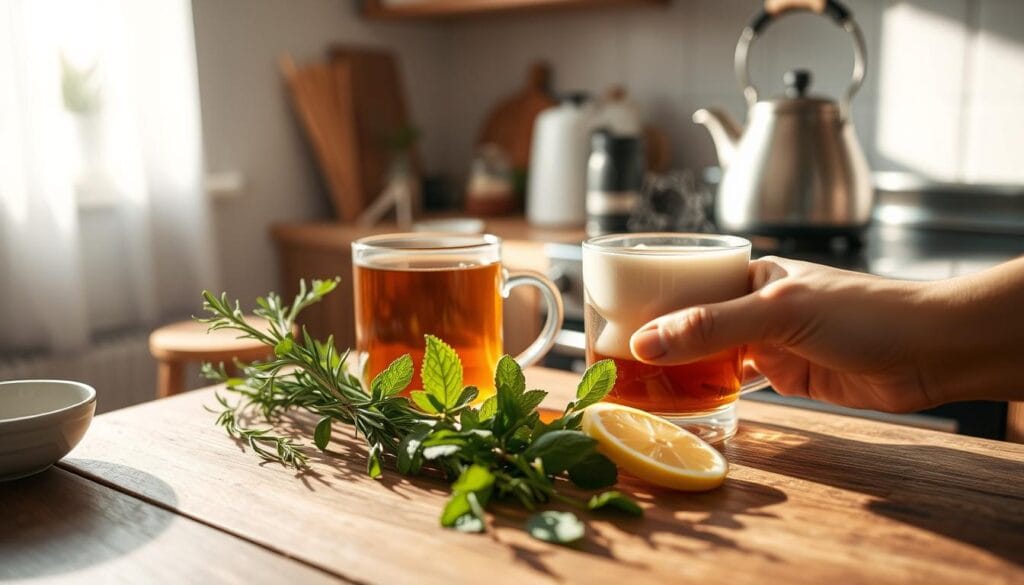
I keep things simple in my kitchen. This guide shows how to make herbal detox tea. It covers brewing, brew times, and adding flavor.
Start by measuring herbs. Use 1–2 teaspoons of loose herbs (or one tea bag) for each 8-ounce cup. Roots like dandelion or burdock need 1.5–2 teaspoons because they are denser.
Next, heat water to near boiling (212°F). Most herbal teas get stronger with boiling water, which is good for roots and tough herbs.
Pour the hot water over the herbs and cover the steeping vessel. This traps the volatile oils.
Let it steep for the recommended time. Then, strain through a fine mesh or remove the tea bag.
Lastly, taste and adjust. Add lemon, honey, or a slice of ginger to match your taste.
Recommended brew times
For leaves and flowers like peppermint and nettle, steep for 5–10 minutes. This makes a balanced cup.
Roots and barks like dandelion root need 10–15 minutes for full extraction. Some prefer simmering roots for 10 minutes for a stronger decoction.
Mixed blends should steep for 10–15 minutes. This covers both leaves and roots. Keep the vessel covered to preserve aroma.
Tips for enriching flavor
Add a squeeze of lemon to brighten bitter roots. I often use lemon with roasted dandelion. Sweeten with honey, maple syrup, or apple juice for taste.
Combine herbs for better effects. Ginger + peppermint soothes digestion. Dandelion + burdock with lemon is classic for liver support.
For a summer drink, make iced herbal sodas. Brew double-strength, cool, then mix with sparkling water and a lemon wedge for a low-sugar option.
Storage and frequency
Store loose herbs in a cool, dark place in an airtight container. Start with 1 cup daily. Many suggest 1–2 cups daily for short periods (3–14 days) or ongoing mild support. I watch how I feel and advise consulting a clinician for longer programs.
| Herb Type | Typical Dose per 8 oz | Brew Time | Flavor Tip |
|---|---|---|---|
| Peppermint (leaf) | 1–2 tsp | 5–10 min | Add a slice of lemon or a touch of honey |
| Nettle (leaf) | 1–2 tsp | 5–10 min | Pair with lemon or apple juice for sweetness |
| Dandelion (root) | 1.5–2 tsp | 10–15 min (or simmer 10 min) | Roasted root + lemon brightens bitterness |
| Burdock (root) | 1.5–2 tsp | 10–15 min | Combine with dandelion and a lemon twist |
| Mixed detox herbal blend | 1–2 tsp (or 1 bag) | 10–15 min | Brew covered to hold aroma; sweeten if needed |
| Double-strength for iced drinks | 2–4 tsp per 8 oz (brew then dilute) | Same as ingredient types | Cool, add sparkling water and lemon |
Popular Herbal Detox Tea Brands
I’ve tried many detox teas and look for clear labels and dosage guidance. A good brand can be part of a gentle detox program or a daily ritual. Here are three popular brands and what I like about each.
Traditional Medicinals focuses on evidence-based herbal products. Their detox teas support the liver and digestion with dandelion root, burdock, and milk thistle. I choose their single-ingredient teas to test an herb before a detox program.
Yogi Tea blends are inspired by Ayurveda and have approachable flavors. Their detox teas mix dandelion, burdock, and ginger for a pleasant taste. Yogi is great for everyday cups that feel like a ritual.
Celestial Seasonings offers affordable options. They use roasted dandelion and other herbs for digestion-focused teas. This brand is perfect for those new to detox teas.
When shopping, I look for full ingredient lists, organic certification, and specific amounts. These factors help me choose a detox tea brand that meets my needs.
| Brand | Typical Detox Ingredients | Best Use | Why I Recommend |
|---|---|---|---|
| Traditional Medicinals | Dandelion root, burdock, milk thistle | Targeted liver and digestion support | Clear labeling, evidence-informed formulas |
| Yogi Tea | Dandelion, burdock, ginger, Ayurvedic herbs | Daily ritual cups, approachable flavors | Flavorful blends that work in a detox program |
| Celestial Seasonings | Roasted dandelion, nettle, mild herbs | Intro to detox-style infusions | Accessible, budget-friendly, widely available |
Start with single-ingredient teas like roasted dandelion or nettle. Choose organic options to reduce pesticide exposure. Remember, detox teas should be used responsibly. Always consult a healthcare provider if you’re unsure about a detox program or product.
Myths and Facts about Herbal Detox Tea

I keep a small jar of loose herbs in my kitchen and a clear view of what works for me. People ask if a detox herbal blend is a miracle or a marketing pitch. I want to clear up some common ideas so you can sip with sense and confidence.
Debunking Common Misconceptions
Many claims say detox teas “remove toxins” that the body cannot clear. The truth is the liver, kidneys, gut, and skin already handle most waste. A detox herbal blend may support these organs by promoting hydration or gentle digestion, but it does not create a magical purge.
Some people believe detox tea causes lasting weight loss. Short-term loss often comes from diuretics or laxatives in the mix, which reduce water weight. Real, sustainable weight loss needs steady changes in diet and activity. I saw this in my kitchen—tea helped my routine, not replace it.
There’s a myth that more tea equals better results. High or prolonged doses of certain herbs can cause dehydration, electrolyte imbalance, or stress on the liver and gut. I recommend moderation and tracking how your body responds.
Scientific Evidence Supporting Benefits
Clinical proof that detox teas cleanse the body in the way marketers suggest is limited. Most research looks at single herbs. Milk thistle’s silymarin shows liver-protective actions. Dandelion may stimulate bile, and ginger supports digestion. These effects hint why some blends feel helpful.
Animal studies sometimes show chelation or toxin-binding for specific botanicals. Human data on true toxin removal are sparse. Medical case reports mention adverse events—severe electrolyte disturbance and rare liver injury—linked to excessive use. That reinforces why I check with a clinician when trying a new blend.
I often ask myself, does detox tea work? My answer: in tandem with better eating, sleep, and hydration, I notice improved digestion and steady energy. The evidence suggests benefits stem from overall habits plus specific herb actions, not a single product doing all the work.
| Claim | What Science Shows | Practical Takeaway |
|---|---|---|
| Removes all toxins | Body organs handle most waste; no strong human data proving full “detox” by tea | Use tea as support—prioritize liver and kidney health through diet and care |
| Sustainable weight loss | Short-term loss often from diuretics/laxatives; long-term requires lifestyle change | Treat tea as an aid for hydration and appetite, not a weight-loss cure |
| More is better | High doses can cause dehydration, electrolyte imbalance, rare liver stress | Stick to recommended amounts and consult a healthcare professional |
| Herbs have targeted benefits | Milk thistle, dandelion, ginger show individual actions in studies | Choose a detox herbal blend with known ingredients and listen to your body |
Incorporating Herbal Detox Tea into Your Routine
I see herbal tea as a daily ritual that helps me stay on track. It’s simple and doesn’t add to my stress. It helps with digestion, reduces cravings, and gives my day structure.
Best Times to Drink
In the morning, a warm cup of roasted dandelion or nettle tea gets my digestion going. I often choose herbal tea over coffee for a smoother start. This habit helps me stay focused all morning.
After meals, peppermint or ginger tea helps calm my stomach and reduce bloating. I keep peppermint tea by the stove for a quick drink after dinner. This is a great time to drink detox tea for digestive health.
Evening teas should be calming and not interfere with sleep. Opt for chamomile or lemon balm blends. Avoid teas with caffeine close to bedtime.
Pairing with a Healthy Diet
Drink herbal cleanse tea with whole foods like leafy greens, cruciferous veggies, berries, and lean proteins. These foods support liver and kidney health. I enjoy simple meals like roasted broccoli, salmon, and a salad, then have a gentle tea afterwards.
Remember, tea doesn’t replace water. Drink water all day to help your kidneys and keep your energy up during a detox program.
Don’t do extreme cleanses. Use tea to make small, lasting changes. Try swapping a sugary drink for herbal tea or adding more veggies to your meals.
Maintaining a Balanced Lifestyle
Tea works best when you also get enough sleep, exercise, and manage stress. I aim for 7–9 hours of sleep, short walks, and 5 minutes of breathwork before meals. These habits enhance the benefits of herbal tea.
To build a habit, make tea part of your morning routine. I prepare a pot and sip while planning my day. Simple rituals help me stay consistent without adding complexity.
Try a 3–14 day reset with 1–2 cups of tea daily, tracking your hydration and energy. For ongoing support, drink 1 cup of gentle nettle or dandelion leaf tea daily. This pairs well with a nutrient-rich diet and steady habits.
Potential Side Effects and Considerations
I enjoy herbal detox teas as a calming ritual. But, it’s key to know the possible side effects. Here’s who should steer clear, signs of too much, and how to drink them safely.
Who should avoid these blends?
Pregnant or breastfeeding women should talk to their doctor first. Some herbs might affect their health. Kids and teens should also avoid these teas.
People with liver or kidney issues, diabetes, or other health problems need a doctor’s okay. Certain herbs can change how these conditions are managed.
Those on medications like blood thinners or antidepressants should check with their doctor. Herbs like licorice and milk thistle can interact with drugs. Also, detox teas might not be good for those with eating disorders or malnutrition.
Recognizing signs of overconsumption
Look out for dehydration, dizziness, and weakness. Nausea, frequent or painful urination, and muscle cramps are also warning signs. Rapid weight loss is a big red flag.
Feeling extremely tired, jaundice, dark urine, or stomach pain means you need to see a doctor. Some teas can harm the liver or cause electrolyte imbalances. For more on the risks, check out this summary: detox tea risks.
Best practices for safe use
Start with one cup a day and watch how you feel for a week. Then, you can increase your intake. Choose well-known brands like Traditional Medicinals or Yogi Tea.
Drink plenty of water and replace lost electrolytes if needed. If you experience any bad symptoms, stop using the tea and see a doctor. Remember, these teas can be helpful when used wisely and as part of a healthy lifestyle.